
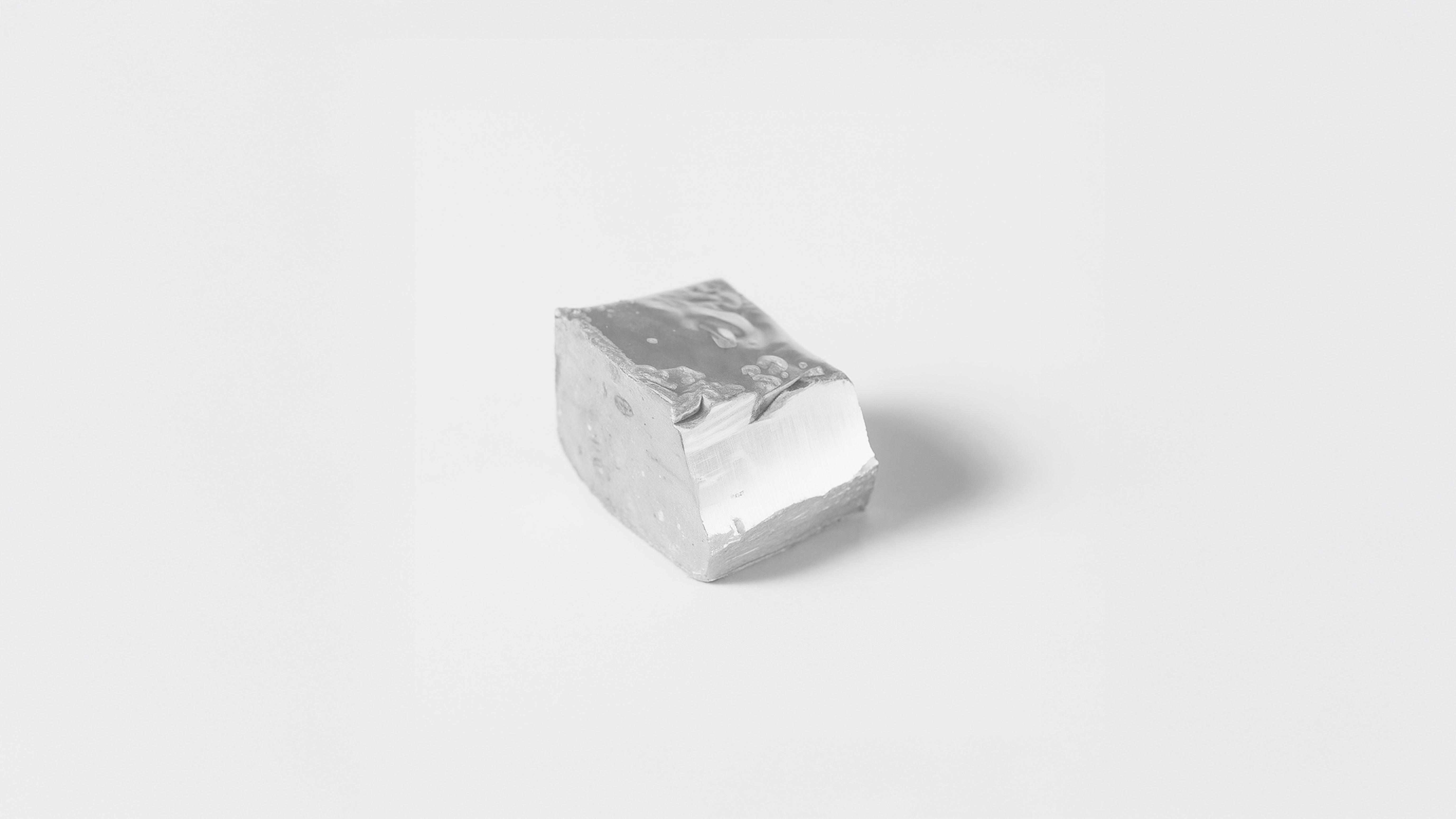
Sodium, salt, curse or blessing
Few nutrients are as polarizing as salt. Sometimes it's considered a silent contributor to high blood pressure, other times an indispensable partner for circulation, muscles and performance, especially during heavy sweating.
The honest answer is, it depends on the quantity, the context, and the person consuming it.
In this article, we'll examine the role sodium plays in the body, why salt has come under criticism in everyday life, what experts recommend, and what particularly active people should pay attention to. This article does not replace medical advice.
Sodium, what is that?
Sodium is an essential mineral. In the body, it exists predominantly as the sodium ion (Na+) and is one of the most important electrolytes. The largest proportion is found outside the cells, i.e., in the blood plasma and extracellular fluid.
In our diet, we usually encounter sodium as sodium chloride, or table salt. This is precisely where confusion often arises, because in everyday language we speak of "salt," while in specifications or laboratory values we often use "sodium" or "sodium chloride."
Salt in everyday life: why it has come under criticism
Without sodium, essential processes could not function, such as the distribution of fluids in the body or the transmission of nerve impulses. At the same time, many people in Western countries consume more salt than recommended over the long term, primarily through highly processed foods like bread, cheese, sausages, ready meals, snacks, and restaurant cuisine.
Health organizations are particularly critical of this consistently high intake, especially when combined with an overall unhealthy lifestyle. Studies in large population groups show that higher sodium intake is, on average, associated with higher blood pressure. Individuals with hypertension, kidney disease, or existing cardiovascular problems often have specific medical recommendations, which should always be tailored to the individual needs of a physician.
Sodium in the body, central functions
Physiologically, sodium is relevant for, among other things:
-
the distribution of water between body compartments and thus the stability of the fluid volume
-
electrical signals in nerves and muscles via voltage differences across cell membranes
-
the transport of certain nutrients across cell membranes, for example coupled to sodium gradients
Important for context: In the EU, no freely usable, positive health claims are permitted for sodium itself, unlike those for many vitamins and minerals. Instead, the regulatory focus is on reducing very high sodium intake through foods with low or reduced sodium or salt content.
Sodium vs. salt: the conversion you should know
In EU nutritional labeling, "salt" is mathematically derived from sodium:
-
Salt = Sodium × 2.5
-
1 g of salt corresponds to approximately 0.4 g of sodium.
This is practical because labels can say "sodium", "salt" or "sodium chloride" depending on the context; physiologically, the sodium ion is always the decisive factor in the end.
Example from our formula, 1000 mg sodium
We use 1000 mg of sodium per serving. This corresponds to the following values according to EU nutritional labeling:
-
2,500 mg salt (the "salt" value is calculated as sodium × 2.5)
-
Approximately 2,540 mg of sodium chloride as a chemical equivalent, if converted to pure table salt.
Important for classification: Food labels usually list "salt," not "sodium chloride." "Sodium" may be listed additionally, but it is not the primary value in the standard nutritional declaration.
How much salt do expert panels recommend?
For healthy adults, commonly used guidelines are in the range of:
-
Approximately 2 g of sodium per day, which corresponds to approximately 5 g of salt per day.
-
Nationally, up to 6 g of salt per day is sometimes discussed as a guideline value.
Important:
-
These are guidelines for the general public.
-
Many people exceed this limit, especially those with high consumption of highly processed products.
-
The recommendation primarily aims to avoid very high long-term exposures.
At the same time, individual needs can deviate from this general guideline in certain situations, for example, during very high physical activity and heavy sweating. In such cases, electrolyte balance becomes relevant.
Salt and health: what research shows
The scientific literature on salt is extensive and not always consistent. However, several key points emerge from the overall review:
-
Long-term high sodium intake is associated with higher blood pressure levels on average in many studies.
-
People react differently to sodium; keyword: salt sensitivity
-
Some studies indicate that both very low and very high sodium intakes may be associated with adverse outcomes in certain risk groups.
Many of these studies are observational studies. This means:
-
They show connections, but cannot prove clear cause-and-effect relationships.
-
Often, specific populations are studied, for example, people with existing cardiovascular disease or diabetes.
-
The results cannot be readily applied to healthy, very active people.
What the JAMA study shows
An example of such data is an analysis published in the journal JAMA by O'Donnell and colleagues in 2011. More than 28,000 people with an increased cardiovascular risk were examined.
The researchers found a J-shaped relationship between estimated sodium intake and cardiovascular events:
-
The risk was lowest in the range of moderate sodium intake.
-
Both significantly higher and significantly lower intakes were associated with an increased risk of cardiovascular events and deaths compared to this moderate range ( JAMA Network ).
Important for classification:
-
This is an observational study.
-
The group studied already had an increased cardiovascular risk.
-
It is not possible to derive individual target values for healthy people from such data.
Despite this complex data situation, professional societies continue to recommend avoiding extremely high intakes, reducing highly processed, high-salt products, and staying within a moderate range, as recommended by EFSA and national bodies.
Salt is therefore neither a pure curse nor a pure blessing, but an essential nutrient whose effects depend on the context and overall lifestyle. However, it's also clear that without salt, many bodily functions would be impaired; too much and too little can be problematic in certain situations.
How much sodium we lose through sweat
During sports or physical work, we lose not only water but also electrolytes, especially sodium. Crucially, both the amount of sweat and the sodium concentration in sweat vary greatly between individuals and situations.
The following order of magnitude are described in position papers, among other things:
-
Sweat rate, roughly 0.5 to 4.0 liters per hour, depending on intensity, climate, acclimatization and body type.
-
Sodium concentration in sweat: approximately 230 to 2300 mg sodium per liter
-
The resulting sodium losses can range from moderate to very high, depending on the person and the situation.
This explains why a rigid, one-size-fits-all strategy is often not advisable, and why electrolytes, in addition to water, can play a role during long, intense training sessions, especially in hot weather.
Important: In rare cases, excessive fluid intake without adequate electrolytes can lead to a dangerous dilution of sodium in the blood (exercise-associated hyponatremia). Therefore, the goal is to drink as needed, not as much as possible.
What active people should pay particular attention to
For people with high levels of physical activity, hard physical work, or frequent exposure to warm environments, monitoring electrolyte balance is particularly relevant.
Practical guidelines:
-
Drink enough before, during and after prolonged exertion, but not "by force".
-
For long or very intense training sessions, especially in heat and with high sweating rates, incorporate electrolytes into your strategy, ideally individually derived.
-
Keep an eye on your overall diet, not just the amount of salt you put on the table.
Those with pre-existing conditions, such as high blood pressure, heart failure or kidney disease, should have changes in salt or sodium intake, as well as sports and drinking strategies, medically supervised.
Pharmaceutical-grade sodium chloride when purity is critical
Our salt is a particularly high-quality sodium chloride, obtained exclusively from the purest evaporated salt from the Austrian Alps, from the Salzkammergut region around Hallstatt, Altaussee, and Bad Ischl. Production is fully automated in a state-of-the-art facility, with a focus on maximum purity, consistent quality, and complete, traceable control of every batch.
Note on pharmaceutical quality: This means that our salt is produced and tested according to particularly strict standards, as are usually applied in areas where the highest requirements for purity, safety and process control are necessary.
Important note: Our salt is a food product. We do not sell medicine and make no medical claims.
In conclusion, salt is neither a curse nor a promise of healing.
Nothing in the body functions without sodium. At the same time, "more" isn't automatically "better," because long-term high intakes, especially from highly processed foods, are detrimental for many people. For very active individuals, the context shifts; due to sweat loss, sodium can become more relevant in practice, making an individualized, needs-based strategy crucial.
Sources
- EFSA, Dietary Reference Values for sodium, EFSA Journal, 2019. European Food Safety Authority +1
- WHO, Sodium reduction, Fact sheet, last updated 7 February 2025. World Health Organization
- Regulation (EU) No 1169/2011, definition of “salt = sodium × 2.5” (Annex I). EUR-Lex +1
- Commission Regulation (EU) No 432/2012, permitted claim “Reducing consumption of sodium contributes to the maintenance of normal blood pressure” and conditions of use (only for low or reduced sodium or salt foods). EUR-Lex +1
- Federal Institute for Risk Assessment (BfR), Health assessment of the salt content of industrially pre-prepared meals, information on the composition of table salt (1 g of salt contains approx. 0.4 g of sodium). Federal Institute for Risk Assessment
- Intersalt Cooperative Research Group, Intersalt, an international study of electrolyte excretion and blood pressure, BMJ, 1988. PubMed +1
- O'Donnell MJ et al., Urinary Sodium and Potassium Excretion and Risk of Cardiovascular Events, JAMA, 2011. JAMA Network +1
- German Nutrition Society (DGE), FAQ on table salt, guideline value up to 6 g of table salt per day. DGE
- National Athletic Trainers' Association (NATA), Position Statement, Fluid Replacement for the Physically Active, Journal of Athletic Training, 2017, data on sweat rates, sodium losses, and risk of hyponatremia. nata.org +1
- Scientific Committee on Food (European Commission), Report on the composition and specification of food intended to meet the expenditure of intense muscular effort, especially for athletes, 2001, Information on sodium in sports drinks (mmol ranges) and hyponatremia context. Food Safety +1
- ICH, Q7 Guideline, Good Manufacturing Practice Guide for Active Pharmaceutical Ingredients. ICH Database +1
- EDQM, Certification of Suitability (CEP), basics and FAQs. edqm.eu +1
- EDQM, European Pharmacopoeia (Ph. Eur.) as a reference for official quality standards in Europe. edqm.eu
- USP, Sodium Chloride monograph (public PDF)
Share:
Potassium
Stevia